


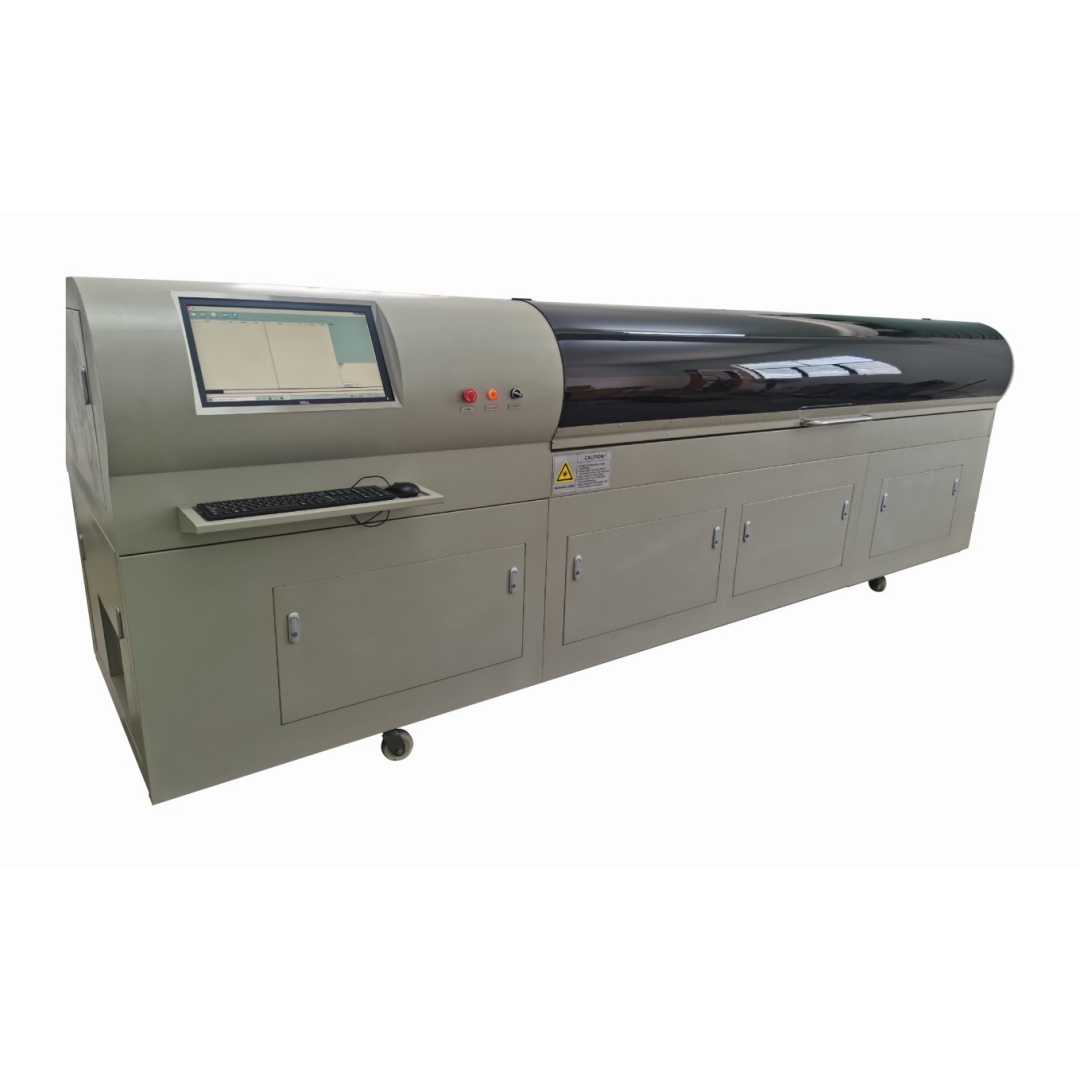
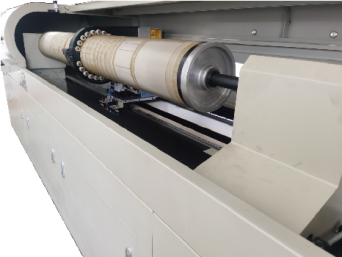
JD Rotary CO2 Laser Engraver
| Model | JD2200RE | JD3500RE | |
| Printing resolution(DPI) | 254/508/720/1016 | ||
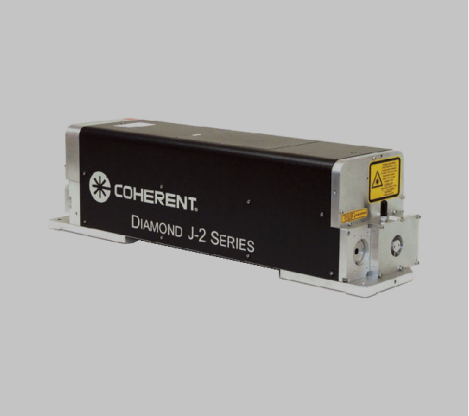
| Laser brand and quantity | CO2 Laser (Coherent Inc) 180W×1
|
||
| Registering precision (μm) | 20 | ||
| Thinnest effective negative line width(mm) | 0.1 | ||
| Effective printing length (mm) | 500~2200 | 500~3500 | |
| Optional circumference (mm) | 640 (Basic)、530、819、914、1018 (Optiona) | ||
| Printing speed(640/1750Screen) | Average 30~40min | ||
| Image format | *.tiff,*.bmp | ||
| Power | AC380V,12KW | ||
| Desktops | LENOVO DESKTOPS | E2-7110 | |
| OS | WIN7/WIN10 | ||
| CO-ROM | PROVIDE | ||
| External dimensions(L×W×H)mm | 4400×1150×1370 | 5800×1150×1370 | |
| Weight(kg) | 1500 | 1800 | |
Coherent Laser-Powered Rapid & Efficient Screen Making Solution
Core Technology:
Utilizes high-performance Coherent CO₂ laser systems with direct thermal engraving technology, significantly reducing production environment requirements while enhancing process control.
Competitive Advantages:
√ Precision Coherent Laser Processing
- Coherent RF laser tube
- Intelligent power regulation (±0.8% energy stability)
- Waterless development creates sharper edges
√ Waterless Process Innovation
- Eliminates water washing and associated dot distortion
- Improves engraving stability by 25% (registration error <0.03mm)
- Completely resolves water stain defects
√ Smart Precision Assurance
- Real-time laser focus auto-compensation
- Dynamic energy density closed-loop control
- Environmental (temp/humidity) auto-calibration
Ideal Applications:
√ Premium products demanding extreme precision
√ High-definition patterns requiring water-free process
Why Choose Us?
- Dual Precision Guarantee: Waterless process + Coherent laser technology
- Process Stability: Eliminates washing variables
- Efficiency Boost: 30% faster production, 15% higher yield rate
“Simplified Excellence · A Step Ahead — The Smart Choice for Small-Batch Production”
Comparison Of Different Rotary Engraver
| TYPE | Rotary UV Engraver | Rotary UV Engraver – Advanced | |
| Laser Comparison | Laser Type | Nichia UV | Nichia UV |
| Number of Lasers | 16/24/32/64/128 | 16/24/32/64/128 | |
| Laser Power | 200MW | 200MW | |
| Laser Cost | Low | Low | |
| Laser Lifespan | High | High | |
| Principle | Multi-channel UV laser exposure | Multi-channel UV laser exposure | |
| Machine Comparison | Common Precision | 720DPI | 720DPI |
| Engraving Speed* | 8 minutes/screen | 8 minutes/screen | |
| Daily Output per Machine* | 40 Pieces | 40 Pieces | |
| Auto Focus | No | Yes | |
| Auto Power Calibration | No | Yes | |
| Mesh Detection | No | Yes | |
| Auxiliary Equipment | No | No | |
| Labor Safety | Avoid direct laser exposure | Avoid direct laser exposure | |
| Consumable Cost | Low | Low | |
| 2KW | 2KW | ||
| Low | Low | ||
| Low | Medium | ||
| Advantages | Meets basic engraving needs with low investment. | Adds automated detection and correction functions to the basic UV version for better results and higher yield. | |
| Suitable Clients | Clients with low precision requirements | High precision requirements | |
Remark
1.Engraving Speed*:The time required to engrave a 2m 640 screen.
2.Daily Output per Machine*:Calculated based on 8 hours per day.
Comparison Of Different Rotary Engraver
| TYPE | Rotary UV Engraver – Advanced | Rotary CO₂ Laser Engraver | |
| Laser Comparison | Laser Type | Nichia UV | Coherent CO₂ |
| Number of Lasers | 16/24/32/64 | 1 | |
| Laser Power | 200MW | 180MW | |
| Laser Cost | Low | High | |
| Laser Lifespan | High | Low | |
| Principle | Multi-channel UV laser exposure | Single-channel CO₂ laser ablation | |
| Machine Comparison | Common Precision | 720DPI | 720DPI |
| Engraving Speed* | 8 minutes/screen | 40 minutes/screen | |
| Daily Output per Machine* | 40 Pieces | 15 Pieces | |
| Auto Focus | Yes | No | |
| Auto Power Calibration | Yes | No | |
| Mesh Detection | Yes | No | |
| Auxiliary Equipment | No | Water cooling/Smoke filtration | |
| Labor Safety | Avoid direct laser exposure | Pay attention to smoke filtration | |
| Consumable Cost | Low | High | |
| 2KW | 12KW | ||
| Low | High | ||
| Medium | High | ||
| Advantages | Adds automated detection and correction functions to the basic UV version for better results and higher yield. | CO₂ laser principle reduces quality
control requirements during engraving. |
|
| Suitable Clients | High precision requirements | Clients with low production volume
and fast production needs |
|
Remark
1.Engraving Speed*:The time required to engrave a 2m 640 screen.
2.Daily Output per Machine*:Calculated based on 8 hours per day.
WORKFLOW ROTARY UV LASER ENGRAVER
- Design Preparation & Color Separation
- Pattern Design: Use professional software (e.g., Adobe Photoshop, Jinchang EX9000) to create the design, ensuring compliance with production requirements (e.g., number of colors, repeat size).
- Color Separation:Separate the design into individual color layers, generating monochrome files (typically saved as BMP or TIF).
- Direct Digital Engraving (CTS):Transfer pattern data directly to the UV laser engraving machine.
- Nickel Screen Pre-Treatment
- Screen Selection:Choose the appropriate nickel mesh Screen** specifications based on design requirements (e.g., mesh count: 40, 60, 80; circumference: 640mm, 819mm).
- High-Temperature Rounding: Install tension rings at both ends of the screen and place it in a High-temperature oven* for rounding (150–180°C, 60 minutes).
- Photosensitive Emulsion Coating
- Emulsion Preparation:Mix Photosensitive emulsion**and adjust viscosity.
- Automatic Coating:Apply emulsion evenly using a Coating machine*(thickness: 10–20μm).
- Low-Temperature Drying:Cure the emulsion in a Low-temperature oven*(30–40°C, 35 minutes) to prepare for exposure.
- Exposure
- UV LASER ENGRAVING MACHINE*(CTS):
A laser beam scans the nickel screen directly, selectively curing the emulsion based on the digital file (no film required; higher precision for intricate patterns).
- Development
- Rinsing:Wash away uncured emulsion with warm water (30–40°C) or a weak alkaline solution to open mesh pores.
- Inspection: Examine under a microscope to ensure clear pores and intact patterns.
- Post-Treatment
- High-Temperature Curing:Fully cure the emulsion in a high-temperature oven (150–180°C, 90 minutes).
- End Ring Installation:
- Apply End ring glue**evenly.
- Use an End ring gluing machine* to install adhesive-coated end rings and dry.
- Quality Check: Verify pattern integrity and registration accuracy ( Light stand*check).
- Printing Preparation
- Labeling & Storage: Organize screens by color code and design number.
- Machine Setup: Test print to adjust squeegee pressure and ink compatibility.
**Red font: Consumables needed in the printing screen production process.
*Red font: Machines needed in the printing screen production process


